Bethel Woods Music and Culture Festival Bethel Woods Center for the Arts August 16
Long-time residents recall Phoenix as a Western town in the desert where the closest matter to culture was a visit from traveling shows. The city came a long way since and so, and today is dwelling house to world-class museums, functioning venues, ballet companies, a great symphony, and recognized architectural features. But the new developments are non solely responsible for the city'due south vibrant cultural scene. Thousands of years ago, indigenous tribes made this desert their home, and their heritage helped to shape the cultural scene in the city as much as the new additions.
Musical instrument Museum — The simply global musical instrument museum in the world, the MIM displays near 68,000 instruments and related artifacts. Paying tribute to these instruments, even the building evokes their shape. A behemothic double bass greets visitors in the Orientation Gallery, among other instruments. From at that place, guests caput upstairs to the Geographic Galleries where the displayed instruments, related costumes, recordings, and videos take them on a trip around the world. A highlight of whatsoever visit, the Easily-On Gallery offers them the chance to play the instruments. Besides the galleries, the museum hosts world-class artists and concerts in its theater.
Heard Museum — Recognized for the quality of its permanent collections and temporary exhibits, the Heard Museum is an amazing museum of Native American art and civilisation. Its highlight is the permanent exhibit called "HOME," presenting everything that defines the dwelling for the indigenous people of the Southwest. Here, visitors can walk through a full-size Navajo hogan and a Hopi piki room, visit a Yaqui ramada, and examine a Pueblo oven. At that place are besides over 400 Hopi katsina dolls, Navajo textiles, and Zuni jewelry pieces to enhance the experience for every type of visitor. Hands-on activities in the "It's Your Turn" showroom deepen the visitor'southward agreement of these cultures. Expanding beyond the Southwest, the "Effectually the World" collection displays works of Native people from other parts of the world. The museum besides hosts temporary exhibits and ethnic festivals and dances.
Pueblo Grande Museum and Archaeological Park — The Pueblo Grande Museum and Archaeological Park digs deep into the history of the area and the people who used to telephone call information technology habitation thousands of years ago. The Hohokam, known as the culvert makers, were some of the best engineers of the ancient world, bringing water to an arid desert and making it habitable. Guest tin can commencement their visit with the Indoor Gallery, to acquire well-nigh the world of the aboriginal canal makers through dioramas, aboriginal jewelry, and pottery exhibits. Outside the building, the archaeological site offers a walk through the remains of an ancient metropolis, including a pit house filled with artifacts. One canal these aboriginal people built, visible from the end of the trail, is still in employ today, bringing h2o to the urban center.
Desert Botanical Garden — Opened in 1939, the Desert Botanical Garden showcases the flora and fauna of the Sonoran Desert, while providing insight into the lives and civilization of the people who have called this arid expanse home for thousands of years. Walking the Plants and People of the Desert Trail, guests tin visit ancient homes of Tohono O'odham, Western Apache, and Hispanic households, as well as learn about the plants locals used for food, medicine, and building textile. Other trails include the Desert Wildflower Trail, bursting with colour in spring and featuring a butterfly and hummingbird garden, and the Eye for Desert Living Trail, showing ideas for efficient and sustainable living in the desert. Besides the outdoor trails, where the garden occasionally hosts great exhibits, it is where the Schilling Library is found, the home of over 9,000 books focusing on the desert's native plants.
Roosevelt Row — Habitation to impressive murals and art galleries, Roosevelt Row is known for its art and cultural events. This street has been effectually fifty-fifty before Arizona became a land, only it was a seedy, unsafe neighborhood until the late 1990s when artists found the one-time battered buildings bonny for affordable studio space. The arts became the force backside the revitalization of the neighborhood, and today Roosevelt Row is one of the most vibrant cultural centers of the entire state. Roosevelt Row is best-known as the host for one of the nation's largest cocky-guided art walks every first Friday, where local artists showcase their piece of work.
Orpheum Theatre — Congenital in 1929, the historic Orpheum Theatre was the pride of the small boondocks of Phoenix, as the only venue between Los Angeles and Denver able to host the traveling vaudeville shows. Designed in the ornate Spanish Bizarre style, the intricate murals and moldings of the theatre enhanced the shows that changed weekly. Over the years, information technology has hosted Hollywood and Broadway celebrities, but by the early on 1980s, worn and outdated, it was ready to be demolished. The metropolis of Phoenix saved information technology from turning into a parking lot by purchasing and renovating it in 1984. At present, listed in the National Register of Celebrated Places, the Orpheum is back to being a beautiful building, hosting corking shows. The Orpheum offers costless tours on Tuesdays, where visitors tin learn about its history and bank check out its stunning architecture.
Photograph: EQRoy/Shutterstock
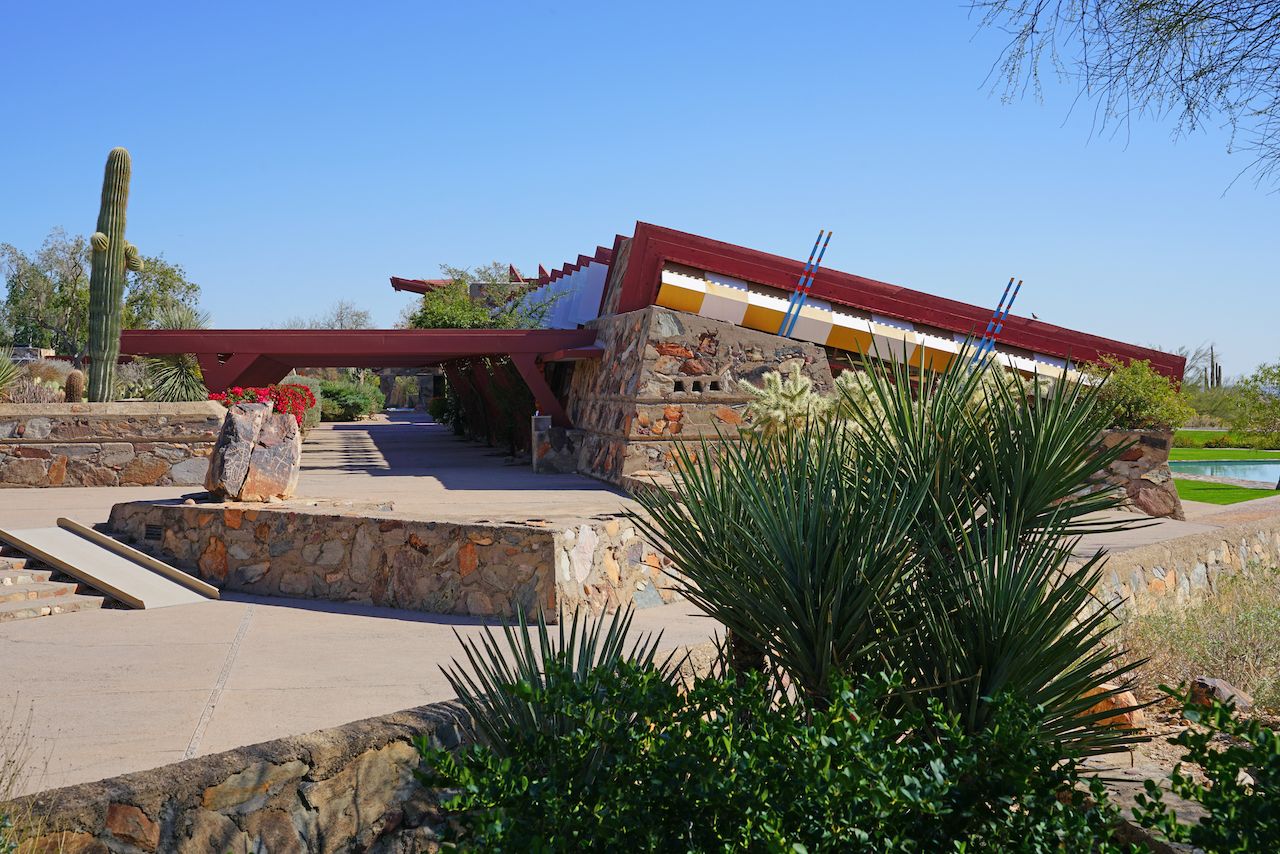
Taliesin W — In the foothills of the McDowell Mountains, Taliesin West houses the Frank Lloyd Wright Foundation and the School of Architecture at Taliesin. Building it as his winter residence, the famous architect tested structural ideas and edifice details here, and used them to showcase the desert surround. Wright designed the structures considering environmental factors in an age when no ane else did, and used sand from the desert washes and stone from the premises, integrating the buildings in their setting. A National Historic Landmark, Taliesin West is open for visitors and offers tours.
Arizona Science Heart — Five stories high, the Arizona Scientific discipline Center features a planetarium, displays permanent and temporary science exhibits, and hosts shows in its large IMAX theater. Kids and adults alike have fun in this museum, from exploring the human torso and mind through interactive exhibits to experiencing the world of science by playing with mechanical, electrical, and electromagnetic displays. Continuing in a imitation hurricane, tornado, or an erupting volcano, or playing with sand, water, and current of air, guests sympathise the forces of nature and explore the possibilities of renewable energy around the world.
Mesa Arts Center — Arizona'southward largest multicultural art complex, the Mesa Arts Center is home to iv theaters, five art galleries, and xiv fine art studios. Housed in an architecturally unique facility in Downtown Mesa, the Art Eye hosts major cultural events and art festivals throughout the yr. You'll find a show at that place for all ages, from classical and jazz concerts to all types of dance, live theater, and comedy. The art galleries are home to the Mesa Contemporary Arts Museum, showcasing internationally recognized and emerging artists, while also hosting art workshops and lectures.
Source: https://matadornetwork.com/destinations/north-america/united-states/phoenix-united-states/art-culture/

Publicar un comentario for "Bethel Woods Music and Culture Festival Bethel Woods Center for the Arts August 16"